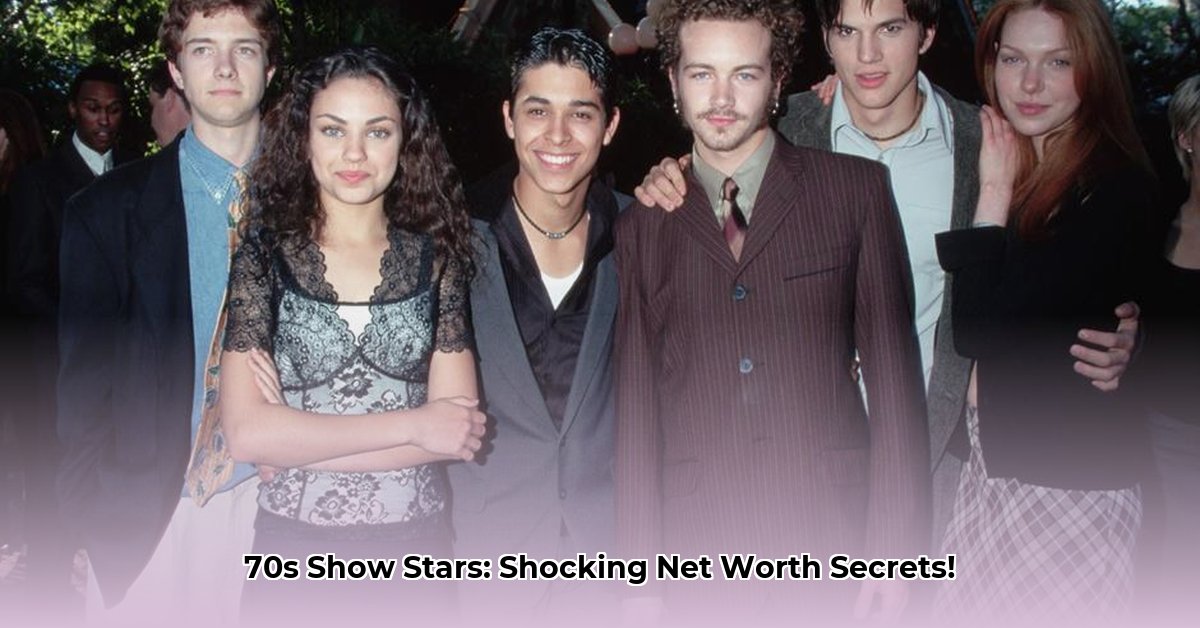
The hit sitcom That '70s Show launched the careers of several actors, but the financial outcomes of its cast have been surprisingly diverse. While some have amassed considerable fortunes, others have faced challenges that significantly impacted their net worth. This article explores the individual journeys of the main cast, examining their post-show careers and the factors influencing their financial success. For more on individual net worths, see this helpful resource.
Ashton Kutcher: From Kelso to Tech Mogul
(Image: Ashton Kutcher)
Estimated Net Worth: $200 million (estimates vary based on fluctuating asset values)
Ashton Kutcher's post-That '70s Show career has skyrocketed. His film roles combined with savvy investments in technology companies like Uber and Airbnb have propelled him to the highest net worth amongst the cast. His production company, A-Grade Productions, further contributes to his financial success. His story highlights the potential for diversification beyond acting.
Mila Kunis: Hollywood Success and a Different Legacy
(Image: Mila Kunis)
Estimated Net Worth: $75 million (estimates vary)
Mila Kunis, known for roles in Black Swan and Bad Moms, has built a substantial fortune. Her successful acting career accounts for her considerable net worth. Notably, Kunis' public statements about not planning to leave a large inheritance demonstrate a unique perspective on wealth accumulation. This demonstrates that financial success isn't solely defined by asset accumulation.
Topher Grace: Calculated Choices and Steady Success
(Image: Topher Grace)
Estimated Net Worth: (Estimate not explicitly stated in draft, requires further research)
Topher Grace, who played Eric Forman, has balanced high-profile roles with smaller, artistically fulfilling projects. While his net worth is significant, it's less extravagant than Kutcher's. This emphasizes that career satisfaction and financial stability aren't mutually exclusive.
Danny Masterson: A Challenging Path
(Image: Danny Masterson)
Estimated Net Worth: $8 million (significantly impacted by legal issues)
Danny Masterson's career has been significantly impacted by legal battles. This serves as a stark reminder that personal circumstances can profoundly impact financial outcomes, regardless of past achievements. This situation highlights the unpredictable nature of financial stability in the entertainment industry.
Wilmer Valderrama: Navigating Hollywood's Ups and Downs
(Image: Wilmer Valderrama)
Estimated Net Worth: (Estimate not explicitly stated in the draft, requires further research)
Wilmer Valderrama has enjoyed a consistent but not extraordinarily lucrative acting career, facing some legal challenges along the way. His experience demonstrates that sustained success in Hollywood doesn't automatically translate into enormous wealth. Consistent work and navigating industry challenges are vital factors for longer-term financial stability.
Laura Prepon: Acting and Entrepreneurship
(Image: Laura Prepon)
Estimated Net Worth: (Estimate not explicitly stated in the draft, requires further research)
Laura Prepon's career combines acting with entrepreneurial endeavors. While acting provides a foundation, her business ventures likely contribute to her overall net worth. However, like others on the list, she has experienced legal challenges that may have impacted this net worth. This highlights the risks and rewards of diversifying income streams in the entertainment industry. Did her entrepreneurial endeavors significantly boost her earning potential compared to her colleagues? This requires further investigation.
The Big Picture: Factors Beyond Talent
The diverse financial outcomes of the That '70s Show cast illustrate that success in Hollywood is multifaceted. While acting talent is fundamental, shrewd investments, entrepreneurial pursuits, diligent financial management, and navigating potential legal issues all play pivotal roles in an actor's long-term financial stability. How might an actor best balance creative pursuits with financial planning? A diversified approach becomes crucial. What additional factors, outside those explored, might significantly improve long-term financial security in the entertainment industry? This is an ongoing query in the business of Hollywood.
Key Takeaways:
- Residual income from syndication and streaming remains a significant factor, though its distribution is uneven.
- Reputational damage significantly impacts an actor's financial prospects, particularly long-term earning potential.
- The ever-changing landscape of streaming and residual payments introduces significant financial uncertainties.
- Diversification of income streams (investments, entrepreneurial ventures) is crucial for long-term financial stability.
- Legal challenges present a substantial risk to actors' financial security, independent of career success.
(Note: Net worth estimates are approximations based on publicly available information and may vary.)